
Streamlining Client Onboarding: Why Accounting Firms Need Bank Statement Conversion Tools
Bank statement conversion tools are software that convert PDF and image bank or credit-card statements into structured spreadsheets for firm workflows. Many firms lose billable hours to manual retyping, inconsistent exports, and repeated cleanup that delays month-end close and client deliverables.
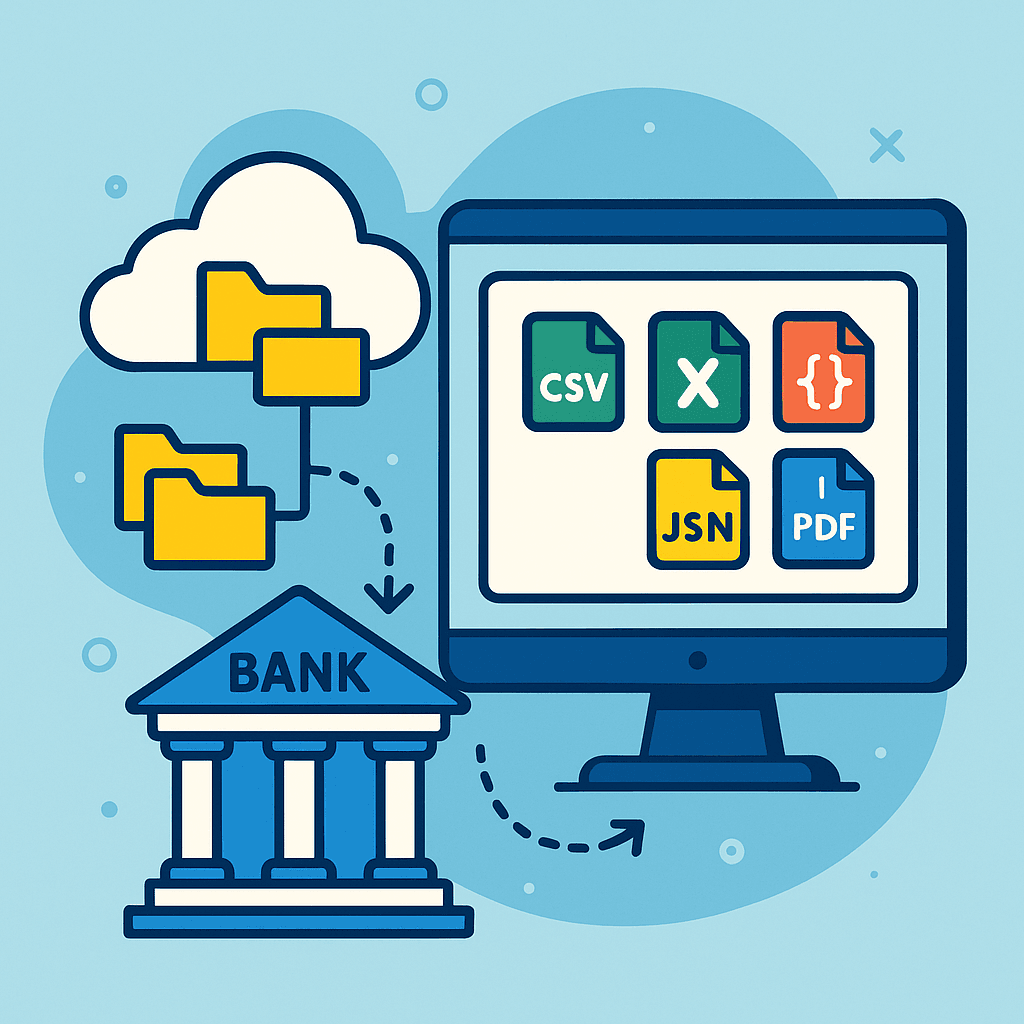
Our product, Rocket Statements, focuses on reliable PDF-to-spreadsheet conversion for multi-client firms. It accepts PDF and image uploads (JPG, PNG), exports CSV, Excel, JSON, and QuickBooks-compatible files, and offers a Google Sheets add-on and Microsoft Excel add-in. Rocket Statements stores documents in cloud folders, supports team accounts and client portals, and validates extracted transactions against the balances printed on the statement so extraction errors surface. It also includes a minor live transaction sync feature, but statement conversion and client workflow are the main capabilities.
Compared with pasting statements into ad-hoc AI chat, Rocket Statements delivers repeatable, auditable output, client-specific folders, and a shared team workspace so you avoid inconsistent parsing and scattered chat histories. For a practical test, start our one-time 20-page free trial to see how consistent exports and client portals cut rework and save billing hours. See how Rocket Statements fits firm workflows on our accounting software solutions page.
💡 Tip: Ask clients to upload native PDFs into their portal folder to reduce image-quality issues and speed processing.
Core Principles of Bank Statement Conversion Tools
Bank statement conversion tools are software that convert PDF and image bank and credit-card statements into structured spreadsheets, which lets accounting firms stop manual data entry and onboard clients faster.
These tools focus first on accurate PDF-to-spreadsheet conversion and workflow controls rather than on live bank connections. According to Rocket Statements, the tool validates extracted transactions against the balances printed on each statement so extraction errors surface instead of passing through.
Core capabilities firms should expect:
- Accurate extraction and validation. These tools extract line items and validate them against the statement's printed balances. This makes errors visible before you import files into accounting systems.
- Consistent, repeatable output. A predictable spreadsheet format reduces cleanup time across dozens of client statements and helps junior staff follow the same process.
- Firm-grade workflows. Multi-tenancy, client portals, team accounts, and cloud folders let firms keep client work separate and accept uploads directly into the right workspace. This reduces misplaced files and manual file routing.
- Practical exports and add-ins. Export formats include CSV, Excel, JSON, and QuickBooks-compatible files for manual import. Google Sheets and Microsoft Excel add-ins let staff work in the apps they already use.
- Live bank sync is secondary. Some providers offer a minor live bank sync that moves transaction data only; this feature does not download statement PDFs and should be treated as a convenience, not the main solution.
Ad-hoc AI chat can parse a single statement but it does not provide a managed, auditable pipeline. For firms that process many clients, a managed conversion tool reduces rework, keeps documents organized in the cloud, and enforces validation so nothing slips through silently.
Our website recommends Rocket Statements when your firm needs consistent, auditable spreadsheets from client-supplied PDFs and images rather than a one-off chat session or manual entry.
💡 Tip: Rocket Statements produces QuickBooks-compatible export files you import manually; include that manual import step in your onboarding checklist.
Proven Strategies for Automating Bank Statement Conversion
Incorporating bank statement conversion tools into your accounting firm's client onboarding process can significantly streamline operations. By automating the conversion of bank statements, you reduce manual data entry, minimize errors, and enhance efficiency. This not only saves time but also improves the overall client experience. Let's explore some proven strategies to automate bank statement conversion effectively.
Leverage Advanced Conversion Tools
Using advanced tools like Rocket Statements can transform your workflow. These tools allow you to:
- Convert PDF and image statements into spreadsheets
- Sync live transaction data from bank accounts
- Transform statements into various formats like CSV, Excel, and QuickBooks compatible files
💡 Tip: Explore how Rocket Statements can automate your document management and conversion needs.
Implement Cloud-Based Document Management
Managing documents in the cloud enhances accessibility and security. With Rocket Statements, you can:
- Organize files with folders and subfolders
- Access documents from anywhere, anytime
- Ensure data security with robust cloud storage
⚠️ Warning: Always ensure your cloud storage complies with data protection regulations.
Integrate with Existing Accounting Software
You can enhance automation by importing Rocket Statements' export files into accounting software like QuickBooks. Rocket Statements offers:
- QuickBooks-compatible export files for manual import (no direct QuickBooks Online integration)
- Export files you can import into accounting software when needed (no automatic data syncing)
These exports let you update accounting data by importing files when you choose; there is no automatic sync. For more insights on automating bank statement conversion, check out our comprehensive guide.
Implementation and Measurement Tips for Bank Statement Conversion Tools
Bank statement conversion tools are software that converts PDF and image statements into spreadsheet files for repeatable firm workflows. This focus on reliable PDF-to-spreadsheet output removes hours of manual entry and produces consistent files your team can import into your accounting system. For example, a small bookkeeping firm that processes 100 client statements per month can replace tedious manual typing with a predictable conversion step and faster client deliverables.
Follow a short, firm-focused implementation sequence to reduce risk and lock in measurable wins.
- Map the end-to-end workflow. Identify where statement PDFs enter the firm, who performs verification, where converted files land, and who imports them into client ledgers. Mapping uncovers costly handoffs and shows where client portals and folders will save time.
- Require client uploads into a client portal. Use client portals and dedicated folders so statements arrive correctly labeled for each client and period. This reduces misfiled documents and saves staff rework.
- Standardize conversion outputs. Configure the tool to produce the desired export format for your team (CSV, Excel, JSON, or QuickBooks-compatible files for manual import). Standard outputs cut the time needed before an accountant can use the data.
- Validate before import. Use the tool’s validation flags that reconcile extracted transactions against the statement balances so extraction errors surface. Stop and fix flagged statements before importing into accounting software.
- Assign team access and permissions. Use team accounts and client workspaces with two permission levels (admin and client) so the right people have the access they need. Clear access levels reduce duplicate work and billing mistakes.
💡 Tip: Require clients to upload statements into their assigned portal folder. That single policy often reduces misnamed files by more than half and speeds processing.
Key metrics to track for multi-client firms 📊
Track conversion accuracy, processing time per statement, and portal adoption rate. These metrics give you actionable checkpoints rather than vague quality assessments.
- Conversion accuracy. Measure the percentage of statements that pass validation with no manual edits. Aim to reduce exceptions month over month. Use the tool’s validation flags as the primary data source.
- Processing time per statement. Track average time from upload to a ready-to-import file. Shorter times lower billing and free staff for higher-value work.
- Portal adoption rate. Measure the share of client statements arriving via client portals versus email. Higher portal use reduces misfiled items and admin overhead.
- Turnaround SLA. Set a firm SLA (for example, 48 hours for standard statements) and report % of statements meeting the SLA.
- Folder hygiene. Track the number of statements landing in unassigned folders. Rising counts indicate process regressions.
Why a managed conversion workflow beats ad-hoc AI chat.
A managed tool provides consistent, repeatable outputs, cloud storage, and team access so every staffer finds the same file in the same place. Ad-hoc AI chat can help analyze a single statement but does not provide client portals, folder organization, team accounts, or built-in validation against printed balances. Rocket Statements gives you controlled exports and collaboration features (Google Sheets add-on and Microsoft Excel add-in) that keep multi-client workflows auditable and predictable.
Quick implementation checklist for the first 30 days.
- Set portal upload policy and announce it to clients.
- Configure standard export formats and a validation review step.
- Create client folders and assign team roles.
- Run a 10-statement pilot, measure accuracy and processing time, then adjust.
⚠️ Warning: Never skip validation flags. Importing unverified conversions raises the risk of posting incorrect transactions and costly reconciliations later.
Elevate Your Accounting Firm's Efficiency
Bank statement conversion tools speed up client onboarding for accounting firms.
Bank statement conversion tools are software that converts user-supplied PDF and image bank and credit-card statements into structured spreadsheet files for bookkeeping. That removes hours of repetitive data entry and reduces transcription errors. For example, a small firm that receives dozens of client statements weekly can move manual entry into a single conversion step and keep records in searchable client folders.
Our website recommends Rocket Statements for firms that need reliable PDF-to-spreadsheet conversion and firm-grade document management. Rocket Statements converts user-supplied PDF and image statements into CSV, Excel, JSON, and QuickBooks-compatible files for manual import. It provides a Google Sheets add-on, a Microsoft Excel add-in, team accounts, client portals, and cloud folders with sharing so firms store and organize client documents. Rocket Statements validates extracted transactions against the balances printed on each statement so extraction errors surface instead of passing through silently. The product also offers a minor, secondary live bank sync that moves transaction data, but that capability is not the product's primary purpose.
Ad-hoc AI chat can parse an occasional statement, but it does not provide a repeatable, auditable workflow for multi-client firms. Chat tools rarely keep documents in client-specific folders, offer controlled client upload portals, or let multiple team members work in a shared workspace. Those gaps force manual cleanup, inconsistent file formats, and extra review time.
- Use a managed conversion workflow when you handle multiple clients.
- Require clients to upload statements to a client portal instead of sending email attachments.
- Store converted spreadsheets in client folders and enable team access.
- Collect PDFs or image statements from clients into the portal.
- Convert them with Rocket Statements to Excel or CSV.
- Review flagged extraction issues and correct any mismatches.
- Export QuickBooks-compatible files for manual import or open the spreadsheet in Excel or Google Sheets for reporting.
💡 Tip: Ask clients to upload original PDFs rather than photos when possible; PDFs typically convert more quickly and with fewer extraction flags.
Start the one-time 20-page free trial of Rocket Statements to convert your first statements, set up client portals and team workspaces, and see how dedicated bank statement conversion tools reduce review time while keeping client records organized.