
How Wealth Managers Can Save Hours Each Week with Automated Bank Statement Parsing
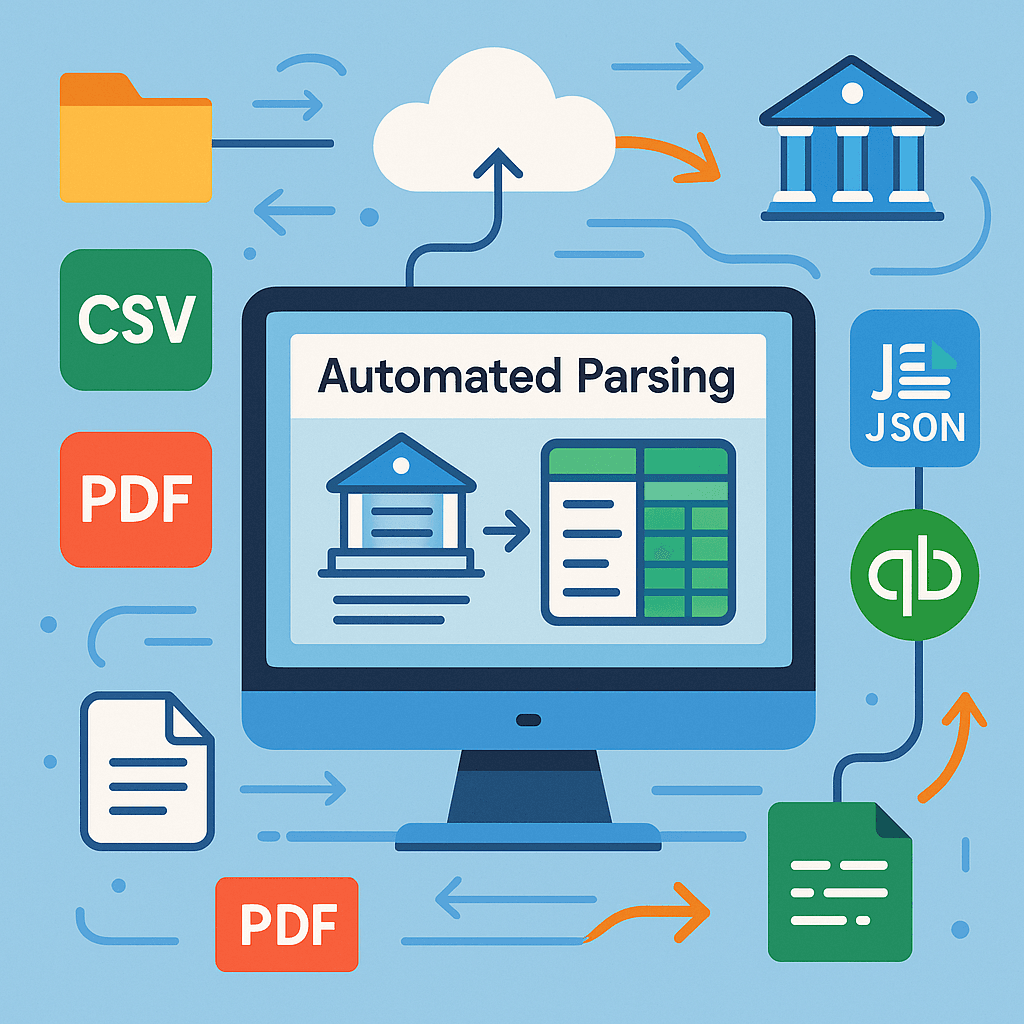
Automated bank statement parsing is a process that converts PDF and image bank or credit-card statements into structured spreadsheets. For bookkeepers and accounting firms handling multiple clients, that removes repetitive data entry and creates repeatable, auditable outputs.
On our site, Rocket Statements converts user-supplied PDF and image statements into CSV, Excel, JSON, and QuickBooks-compatible files, and lets you re-download the original PDF you uploaded. Rocket Statements also provides a Google Sheets add-on, a Microsoft Excel add-in, team accounts, client portals, and cloud folders so your firm can keep client workspaces separate and share files securely.
This how-to guide shows step-by-step actions: upload PDF or image statements, assign them to a client folder or portal, run the conversion, confirm the extract against the statement balance, and export the file for manual import into your accounting system. Using a managed workflow like Rocket Statements reduces inconsistent outputs and scattered files you get from ad-hoc AI chat, and gives your team a single place to review, re-run, and audit conversions.
💡 Tip: Ask clients to upload statements directly to their portal to avoid re-mapping files and speed onboarding.
Ready to try it on real files? Start with our 20-page, one-time free trial to test conversions on a few client statements and confirm the output meets your workflow.
Understanding Automated Bank Statement Parsing
Automated bank statement parsing is a document-processing service that converts user-supplied PDF and image bank or credit-card statements into structured spreadsheets for immediate use by firms handling many clients.
Automated bank statement parsing converts uploaded PDFs and images into CSV, Excel, JSON, or QuickBooks-compatible files for manual import. This matters for bookkeepers and accounting firms because spreadsheets are the immediate, usable format for reconciliation, reporting, and import into accounting systems.
Rocket Statements accepts PDF and image uploads and produces CSV, Excel, JSON, and QuickBooks-compatible export files; users can also re-download the original PDF they uploaded but PDF is not an output conversion format. Rocket Statements does not connect directly to QuickBooks, Xero, or Sage or push transactions into those products; the exported files require manual import into accounting software.
Rocket Statements provides a managed workflow that reduces variation between clients and staff. Our product supports client portals, multi-tenant workspaces, team accounts, and cloud folders with sharing, so firms keep statements organized, maintain consistent file naming, and let clients upload directly into the correct workspace. This beats ad-hoc AI chat for firm use because chat histories are individual, outputs vary by prompt, and documents are not stored in shared folders for team access.
Rocket Statements validates extracted transaction data by reconciling it against the balances printed on the statement so extraction errors surface instead of passing through silently. For example, a small firm that processes dozens of statements weekly avoids repeated fix-ups when extraction mismatches are flagged up front.
Rocket Statements also offers a Google Sheets add-on and a Microsoft Excel add-in for teams that want to work directly in spreadsheets. The product includes a minor live bank sync that moves transaction data only; it does not download statement PDF documents from banks on the user’s behalf.
💡 Tip: Require clients to upload statements via their portal and use a consistent file naming convention. That reduces follow-up, speeds processing, and keeps client folders ready for team review.
Step-by-Step Guide to Using Rocket Statements
Upload a PDF or image and receive structured CSV, Excel, or JSON exports while storing and sharing source files and outputs in client workspaces and folders.
Rocket Statements is a PDF-to-spreadsheet tool that converts user-supplied PDF and image statements into structured files and keeps those files in organized cloud folders. This workflow replaces repetitive data entry and centralizes documents so teams and clients access the same records.
Step 1: Create or assign a client workspace 📁
Create a client workspace and invite team members or clients to upload statements into that workspace. Rocket Statements supports multi-tenancy and client portals, so clients can upload directly into the correct client folder. This prevents email attachments and misfiled documents. For firms, assigning statements to client workspaces at intake saves hours per month on triage.
💡 Tip: Ask clients to upload statements through the client portal rather than email to keep PII in the right place and simplify tracking.
Step 2: Upload the statement file 📤
Upload the PDF or image (JPG, PNG) the client provided into the assigned workspace. Rocket Statements accepts only user-supplied statement files; it does not log in to banks to fetch statement documents. You can re-download the original PDF later, but PDF is not a converted output format.
Step 3: Convert and choose an export format ⚙️
Run the conversion to produce CSV, Excel, JSON, or QuickBooks-compatible files for manual import. Rocket Statements outputs structured files you import yourself; it does not push data directly into QuickBooks, Xero, or Sage. Use the Excel add-in or Google Sheets add-on to open or pull converted results directly into spreadsheets for reporting or review.
Step 4: Review extracted transactions and validate balances ✅
Review the extracted transactions in the workspace and fix any flagged items before export. Rocket Statements validates extracted transaction data against the balances printed on the statement so extraction errors surface rather than passing through silently. This step reduces downstream reconciliation time and the risk of incorrect entries reaching client books.
Step 5: Organize, share, and assign work for firm workflows 🗂️
Move outputs into folders and subfolders, set sharing permissions, and assign tasks to team members within the client workspace. Rocket Statements stores documents in the cloud and supports team accounts, which makes it easy for bookkeepers and managers to coordinate reviews across multiple clients without losing version control.
Step 6: Export for accounting or client deliverables 📦
Download the CSV, Excel, JSON, or QuickBooks-compatible file and import it manually into your accounting system or client file. For bookkeepers who prefer spreadsheets, open the Excel file in the Excel add-in or pull the data into Google Sheets using the add-on. Do not expect an OAuth push; all imports into accounting platforms are a manual step.
Optional: Use live bank sync only when you specifically need it 🔌
Use the minor live bank sync feature only if you need direct transaction imports from supported banks; it is a secondary capability and not required for PDF-to-spreadsheet conversion. Keep the primary workflow focused on converting and validating uploaded statements.
⚠️ Warning: Do not email unencrypted statements. Use client portals and folder permissions to limit exposure of sensitive information.
Ready to convert your first statements? According to Rocket Statements, start with a free trial that covers 20 pages, one time total — a quick way to test the conversion workflow and client portal intake on a sample set of statements.
If you want to move faster across multiple clients, use Rocket Statements to centralize uploads, validate extracted data, and produce the CSV/Excel/JSON files your team imports into accounting systems.
Tips and Common Mistakes in Automated Bank Statement Parsing
Automated bank statement parsing is a process that extracts transactions from PDF and image statements into structured spreadsheet files. Our website recommends using Rocket Statements to handle bulk conversions for firms because manual entry wastes billable hours and introduces inconsistent outputs across clients. This section gives firm-focused, actionable steps to set up a repeatable parsing workflow and avoid common mistakes.
Client portals and multi-tenant workspaces 🗂️
Client portals and multi-tenant workspaces let firms keep each client's statements separate and let clients upload directly to the correct folder. Create one workspace per client, invite the client to the portal, and assign upload-only permissions where appropriate. Use folders and subfolders to track processing stage (incoming, flagged, reviewed, ready for export). Rocket Statements supports team accounts, so assign reviewers and approvers instead of exchanging files over email.
💡 Tip: Require clients to upload statements via the client portal so files land in the correct workspace and document history remains traceable.
Use Rocket Statements for PDF-to-spreadsheet conversions 📄
Rocket Statements converts uploaded PDF and image statements into CSV, Excel, JSON, and QuickBooks-compatible files for manual import. Upload the original PDF or image, run a batch conversion, then export the chosen format. Install the Google Sheets add-on or Microsoft Excel add-in to open converted files directly in your spreadsheet workflow without extra file juggling.
Validate flagged statements instead of full manual checks ✅
Rocket Statements validates extracted transaction data against the balances printed on the statement so extraction errors surface as flagged items. Focus human review on files or line items that the system flags rather than rechecking every transaction. Keep a "flagged" folder for items under review and an "approved" folder for completed conversions to speed audits and client reporting.
Build a repeatable team workflow 🛠️
A repeatable workflow prevents rework and keeps outputs consistent across clients. Follow these steps:
- Create a client workspace and standard upload folder.
- Instruct clients to upload statements to the portal.
- Batch-convert new uploads with Rocket Statements.
- Review only flagged items and move approved files to the export folder.
- Export CSV/Excel/QuickBooks-compatible files and import manually into your accounting system.
Common mistakes to avoid ⚠️
The most common mistakes are treating every file the same, ignoring validation flags, and relying on ad-hoc tools that do not support team workflows. Do not make live sync the primary workflow; the live bank sync in Rocket Statements is a minor feature and not a substitute for converting client-supplied PDFs and images. Avoid checking every line manually — let Rocket Statements surface exceptions and review those instead. Use the cloud storage, folders, and sharing features to keep an audit trail and prevent local file sprawl.
⚠️ Warning: Do not email sensitive statements. Use the client portal or shared workspace so documents remain stored and auditable in the cloud.
Compared with pasting statements into a chat window, Rocket Statements gives consistent outputs, folder organization, and multi-user permissions that reduce risk and save firm hours on repeated work.
Optimize Your Workflow with Automated Bank Statement Parsing
Automated bank statement parsing converts PDF and image statements into structured spreadsheets and organized cloud workspaces firms can use for repeatable client workflows. According to Rocket Statements, the product focuses on converting user-supplied PDF and image statements into CSV, Excel, JSON, and QuickBooks-compatible files while storing documents in organized folders and client portals.
Key firm-level benefits and business outcomes.
- Consistent spreadsheet outputs across every client, which reduces time spent standardizing columns and formats.
- Cloud storage with folders and subfolders so teams find client documents without relying on one person's files.
- Client portals and multi-tenant workspaces that let clients upload statements directly into the correct client folder.
- Team accounts and sharing so reviewers, billers, and partners work from the same dataset.
- Exports prepared for manual import into accounting systems (CSV, Excel, JSON, QuickBooks-compatible files).
- Validation against the balances printed on the statement so extraction errors surface instead of passing through, reducing rework and missed transactions.
- Google Sheets add-on and Microsoft Excel add-in for quick access to converted data.
Managed workflows produce consistent, auditable spreadsheet outputs that scale across clients. ⚖️
Managed workflows deliver repeatability and an auditable trail that ad-hoc AI chat cannot provide. Chat tools often create inconsistent column names, one-off formatting decisions, and no central folder structure. Firms waste time reconciling variations, hunting for the original file, or re-doing extractions when a second team member needs the same output. For example, a bookkeeping practice processing dozens of statements per week avoids repeated manual edits when every statement converts to the same template and is stored in the client folder.
Use Rocket Statements to centralize statement-to-spreadsheet tasks and reduce client rework. 📁
Rocket Statements converts uploaded PDF and image statements into CSV, Excel, JSON, and QuickBooks-compatible files while keeping the original source and exports in the client workspace. Follow this simple workflow to reduce errors and save staff time.
- Upload the PDF, JPG, or PNG statement to the client workspace or have the client upload through the portal so the source file stays attached to the job.
- Select the export format (CSV, Excel, JSON, or QuickBooks-compatible) and run the conversion. Files download in a uniform format your team expects.
- Review the items flagged by the balance-based validation and correct any issues before import so downstream reconciliation takes less time.
- Store the converted files and original PDFs in the client folder and share access with reviewers or billers.
💡 Tip: Standardize client folder names (client ID, year, statement type) before importing so automated exports land in the correct place and everyone on the team can find them quickly.
Start with a one-time 20-page free trial, upload your first statement, and confirm the conversion and folder workflow meet your firm’s needs at Rocket Statements. Compare plans on the pricing page when you’re ready to scale the number of client workspaces and team seats.